
a. Fill in the blanks. Listen and repeat.
(Điền vào chỗ trống. Nghe và lặp lại.)
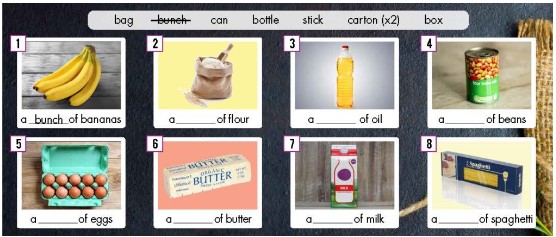
1. a bunch of bananas (1 nải chuối)
2. a bag of flour (1 túi bột mì)
3. a bottle of oil (1 chai dầu ăn)
4. a can of beans (1 lon đậu)
5. a carton of eggs. (1 hộp trứng)
6. a stick of butter (1 thanh bơ)
7. a box of milk (1 hộp sữa)
8. a carton of spaghetti (1 hộp mì ống)

Các bài tập cùng chuyên đề
Take turns saying where to put the groceries.
(Lần lượt nói về nơi đặt những hàng tạp phẩm.)
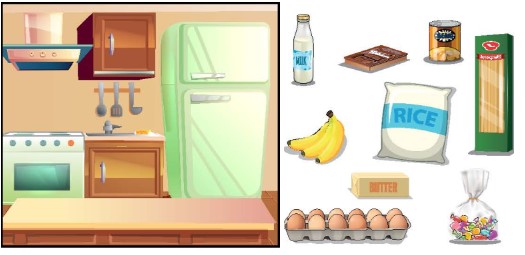
There's a bag of rice. (Có 1 túi gạo.)
Put the bag of rice in the bottom cupboard. (Đặt túi gạo dưới đáy tủ.)
ОК. (Được thôi.)
Match the words with the descriptions.
(Nối từ với mô tả phù hợp.)
|
1. bunch 2. carton 3. flour 4. butter 5. fridge 6. supermarket 7. spaghetti 8. tablespoon |
a. a container for milk, juice, or eggs b. a place to keep butter and milk cold c. an ingredient in pancakes and bread d. a type of noodle from Italy e. a place to buy all your groceries f. It's like a teaspoon but bigger. g. You can buy it in sticks. h. some fruit growing together, like bananas or grapes |
Food & Food categories (Đồ ăn và các loại đồ ăn)
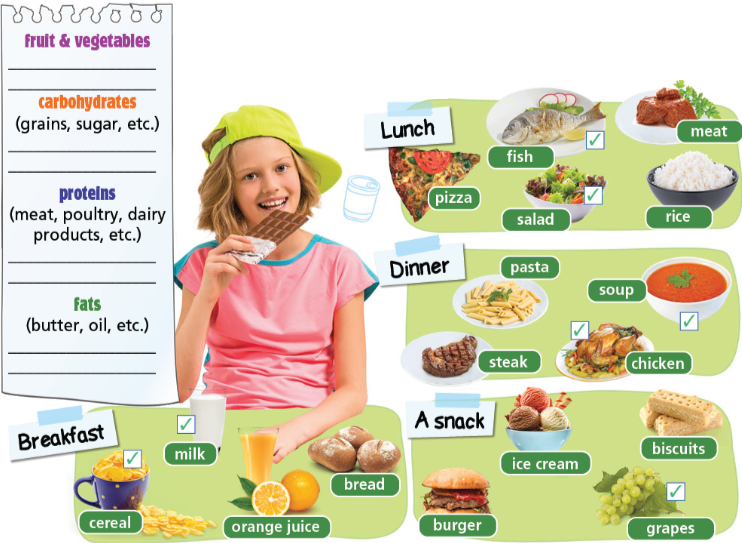
1. Look at the pictures. List the foods/drinks under the categories. Listen and check.
(Nhìn vào các bức ảnh. Liệt kê các loại đồ ăn/ thức uống vào các mục. Nghe và kiểm tra lại.)
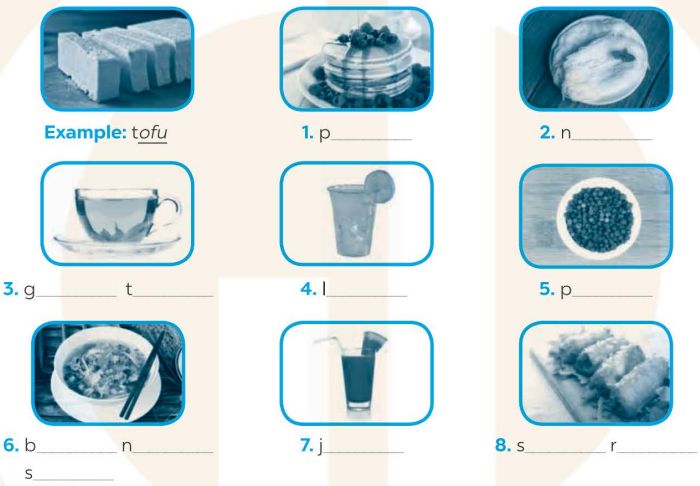
1. Write the words or phrases with the given letters under the pictures.
(Viết các từ hoặc cụm từ với các chữ cái đã cho dưới các bức ảnh.)
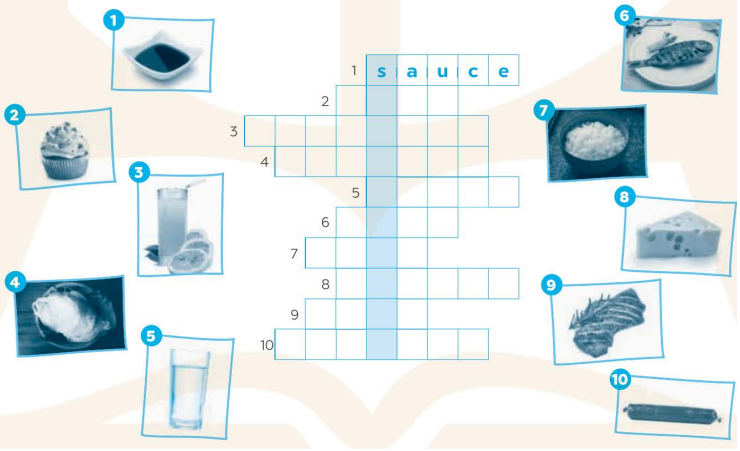
2. Do the puzzle. Find the food in the blue column.
(Giải câu đố. Tìm tên món ăn ở cột màu xanh.)
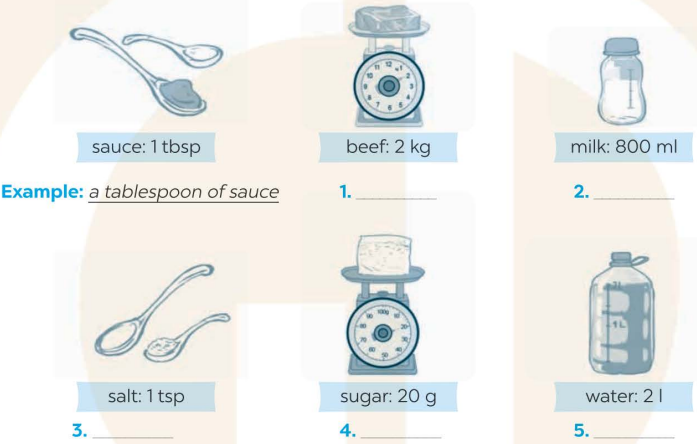
3. Write the amount under each picture.
(Viết số lượng dưới mỗi bức ảnh.)
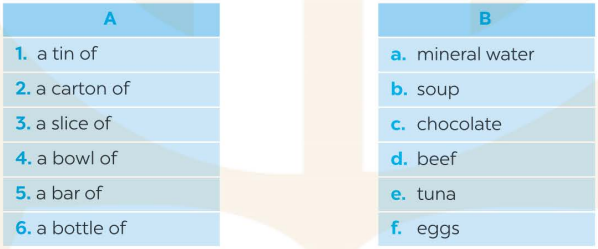
4. Match the phrase in column A with the nouns in column B.
(Nối các cụm từ ở cột A với các danh từ ở cột B.)
a. Unscramble the words.
(Xắp xếp lại từ)

b. Read the clues and do the crossword puzzles
(Đọc các manh mối và thực hiện các câu đố ô chữ)

Down
1. It's a small yellow fruit with a sour taste.
2. It's a small measurement for liquid.
3. I take one_________of sugar in my coffee.
4. We need 50__________of butter to make the cake.
5. This vegetable makes you cry.
Across
6. It's red and juicy. We use it in salad.
7. It's a large spoon.
8. It's a famous noodle dish from Italy.
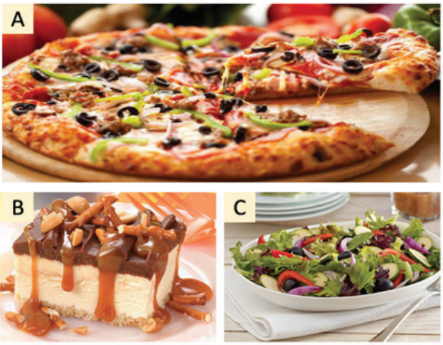
1. Order the letters for parts of a meal 1-3. Match them with photos A-C.
(Sắp xếp chữ cái mỗi phần của món ăn 1-3. Nối chúng với hình A-C.)
1. A small dish eaten as the first part of a meal:
(Satrert)_____
2. The largest or most important part of a meal:
(iMan Cuores)______
3. Sweet food eaten at the end of a meal:
(essDret)_____
Put the correct word into the blank.
Put the correct word into the blank.
Put the correct word into the blank.
Put the correct word into the blank.
Read the following passage and choose the best answer for each blank.
The History of Pizza
There are not (1)_____ nations that can say their national dish has become an international phenomenon. Italy has two such (2) _____, pasta and, of course, pizza. Both are (3)______ all over the world, both have made the history of Italian food. Pizza in (4) _____ most basic form as a seasoned flat bread has a long history in the Mediterranean. (5) ____ cultures including the Greeks and Phoenicians ate a flat bread made (6) _____ flour and water. The dough would be cooked by placing on a hot stone and then seasoned with herbs. (7) ______ America, pizza usually falls (8) _____ two categories: thick and cheesy Chicago style or thin and more traditional New York pizza. (9)_______ Italy, pizza also falls into two distinct categories: Italian pizza and the rest of the world. It might seem silly considering the basic ingredients, but one taste of a true Italian pizza and that's it. You will never feel the same about this simple and (10)_______ food again.






Danh sách bình luận